
Seasons – Summer 2026
Welcome to Seasons, a quarterly newsletter designed to help Texas landowners stay informed, inspired, and in tune with the land throughout the year.
Summer Landowner Tips

Whether your property is managed for wildlife, livestock, recreation, or a combination of uses, prickly pear can become a challenge if left unchecked. While prickly pear cactus is native to Texas and provides numerous wildlife benefits, excessive growth often creates problems for landowners. Dense infestations can restrict access across your property, making it difficult to move livestock, maintain fences, operate equipment, or enjoy recreational activities.
Prickly pear is also highly effective at spreading. Individual pads can break off during mowing, livestock traffic, rainfall events, or other disturbances and quickly take root in new areas. What begins as a small patch can expand into a large infestation in just a few growing seasons.
When land management activities are reduced, especially during periods of drought or overgrazing, prickly pear often gains a competitive advantage. As it spreads, it can crowd out desirable grasses and native plants, reducing forage production, limiting plant diversity, and impacting the overall health and resilience of the landscape.
The good news is that early management is often more effective and cost-efficient than waiting until prickly pear becomes widespread. Regular monitoring and timely treatment can help keep infestations under control and maintain the long-term productivity and usability of your land.
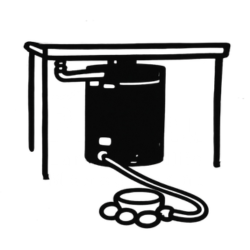
Water is often top of mind for Texas landowners during the summer months. As temperatures rise and rainfall becomes less predictable, reliable water sources become increasingly important for wildlife. For properties with existing wells, troughs, ponds, or other water infrastructure, providing supplemental water can be a relatively simple management activity. However, many properties lack dependable year-round water sources, and natural creeks, ponds, and low spots may dry up during extended periods of hot, dry weather.
When drought conditions reduce the availability of natural water, wildlife must travel farther to meet their basic needs. Providing a consistent water source can help support deer, turkey, quail, songbirds, and other wildlife while improving the overall usability of your property as wildlife habitat. Our rainwater collection systems offer a practical solution that also qualifies as a Wildlife Management activity. Our custom-built Water Table systems are fabricated in Texas and designed specifically for wildlife use. Both models can be filled by rainfall or a water hose and require very little ongoing maintenance.
If your property lacks dependable water sources, or you’re looking to enhance existing wildlife habitat, a supplemental water system can provide a reliable source of water when wildlife need it most.

Many Texas landowners enrolled in Wildlife Management aren’t sure whether they need an Annual Report until the County Appraisal District asks for one. An Annual Report is a record of the Wildlife Management activities completed on your property during the year. It documents the work you’ve done, such as supplemental water, habitat management, brush control, census counts, or other qualifying activities, and helps demonstrate your continued commitment to managing land for wildlife. While not every county requires landowners to submit an Annual Report each year, many appraisal districts can request documentation at any time. If you’re unable to provide records of your Wildlife Management activities, it can create unnecessary stress and delays during the review process.
A common scenario: A landowner receives a letter from their County Appraisal District requesting documentation of Wildlife Management activities. Without organized records, they may spend hours searching for photos, receipts, maps, and notes to piece together their history of management activities. With an Annual Report already completed, the documentation is readily available when needed.
Our Annual Report service takes the guesswork out of the process. We compile your Wildlife Management activities, organize supporting documentation, and prepare a professional report that can be kept on file for your records or provided to the appraisal district if requested.
Starting in August, our Annual Report pricing will increase. If you’ve been considering having your report prepared this year, now is a good time to get started before the new pricing takes effect.
Lately on Your Texas Land
Recently on Your Texas Land, we connected with Will Newman from Texas Parks and Wildlife to discuss conservation cost-share programs available to Texas landowners. Learn how the Farm Bill supports private-land conservation, the role of programs like EQIP and CRP, and practical steps for improving wildlife habitat while meeting your land management goals. We also highlight our Foliar Application services and talk practical brush control in Texas, from “painting prickly pear blue” to managing mesquite and invasive species. Learn why cutting alone isn’t enough, which herbicide methods work best, and how to plan treatments safely and effectively.
We want feedback! What do you want to hear next? Email us here and suggest a topic you want our team to tackle next.
Haven’t listened? Subscribe and follow us today on Spotify, Apple Podcasts or wherever you listen to be the first to hear from our partners and team on issues that most landowners face daily.

Cost-Share Programs – Building Your Conservation Team

Painting Prickly Pear Blue – Reclaiming Your Land
Real Texas Land. Real Results.
This month, we’re highlighting one of the most effective tools we’ve found for feral hog control, the Pig Brig Trap System. Twenty-one hogs. One night. One trap.
In this video, Plateau’s John Kinsey walks through everything that goes into a successful Pig Brig operation. Drawing on more than a decade of feral hog trapping experience, John explains the components of the system, how it’s set up, and why proper preparation is critical to success. The video also follows one of our most successful trapping efforts to date, resulting in the capture of 21 feral hogs in a single night at Pecan Springs Karst Preserve, a property owned and managed by Hill Country Conservancy.
If feral hogs are damaging your property, rooting up native habitat, or impacting livestock and wildlife resources, this video provides a firsthand look at a proven strategy for reducing hog populations.
What if Wildlife Management could do more than maintain your property tax valuation? In this featured video, Whit Hanks, owner of Camp Lucy, shares how transitioning from an agricultural valuation to Wildlife Management Tax Valuation created benefits far beyond tax savings. What began as a practical land management decision evolved into a healthier property, increased wildlife activity, and an enhanced guest experience at one of the Texas Hill Country’s premier destination resorts.
Whit discusses why he made the switch from cattle production to Wildlife Management, how the process works, and how Plateau helps keep the property compliant year after year. He also shares what the transition has cost, the value it has created for Camp Lucy, and his advice for landowners considering a similar move. Whether you own a working ranch, recreational property, or family land, Whit’s experience offers a firsthand look at how Wildlife Management can benefit both your land and your bottom line.
For more on what we’ve been up to, check out our Youtube, Facebook, or Instagram and follow along.
Beep-Beep! The Greater Roadrunner exhibits a certain “roguish” charm.
Featured Article from Tucker Slack, Wildlife Biologist
The phrase “Beep-Beep” almost unequivocally conjures up images of the famed Warner Brothers Cartoon nemesis of Wile E. Coyote…The Roadrunner. However, depending upon your age, said roadrunner either symbolizes a forgotten time when people actually illustrated cartoons by hand with pencils and telephones were just for calling people, or it elicits thoughts of neck-breaking, lightning-fast, instantly gratifying , high speed internet access. Regardless of which thought the roadrunner evokes in you, one thing is certain; It is indisputably affiliated with speed.
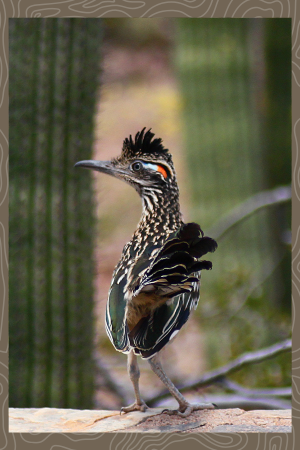
The Greater roadrunner (Geococcyx californianus) is a ground dwelling member of the Cuckoo Family (Cuculidae). A large bird, reaching a total length of 24 inches, it is the only roadrunner found in the United States. Often thought of as only an iconic species of the desert southwest, the Greater roadrunner can actually be found throughout Texas, even behind the “pine curtain” of the easternmost regions of the state. The tell-tale “beep-beep” often associated with this bird is not even close to the actual dove-like coos and clicking vocalizations they use to communicate. Capable of attaining speeds of up to 17 mph, speed is their greatest asset.
Roadrunners are aptly named for their affinity for running and walking, but are capable of flying. Though, they rarely fly unless threatened by a dangerous situation (such as a falling ACME anvil). Even when threatened, roadrunners will only fly short distances, and usually hit the ground running.
Well-known as rattlesnake eaters, the roadrunners diet is actually as diverse as the habitats in which it can be found. They persist mainly on other animals, such as insects, lizards, snakes, rodents, and other birds. Roadrunners are exceptionally agile and can catch birds out of the air. Their long tail provides a valuable counterbalance as they are often involved in high speed pursuit of prey. Armed with speed, agility, power, and a sharp beak, the roadrunner usually has no problems getting groceries. However, if necessary, they will subdue their quarry by repeatedly slamming them into the ground. Roadrunners prefer to eat on the run, and are often seen with a snake or lizard hanging from their mouth.
Greater roadrunners live from 7-10 yrs, and reach maturity after two years. They breed once or twice annually which usually depends upon localized habitat conditions. Roadrunners are monogamous, and males exhibit some interesting, albeit shady, courtship rituals. The male will often entice a potential mate with a tasty morsel while performing a tantalizing dance, all the while keeping the food just out of her reach. While she is preoccupied with her growling stomach and trying to keep her eyes on the prize, he will jump on her and seal the deal. After breeding, the male relinquishes the bait, and through this chicanery a lifelong pair bond is formed.
As we all know, there is nothing like blatant deception to establish a strong, solid foundation for a lifelong relationship. If for no reason other than their unadulterated ingenuity, these unique birds should be appreciated and respected… and watched very closely.
Be In The Know
Confirmed Detections of New World Screwworm
Article by the Animal and Plant Health Inspection Service
The dashboard below is designed to provide a current snapshot of confirmed New World screwworm animal and wild fly detections in the United States. USDA APHIS is fully prepared to respond to detections, and we work closely with our State partners on surveillance, reporting, and control efforts. Continue Reading



Sorry, the comment form is closed at this time.